Why your gut slows down when you travel, and what to change first
Field notes for the Gut Trail4 min readUpdated 29 September 2026
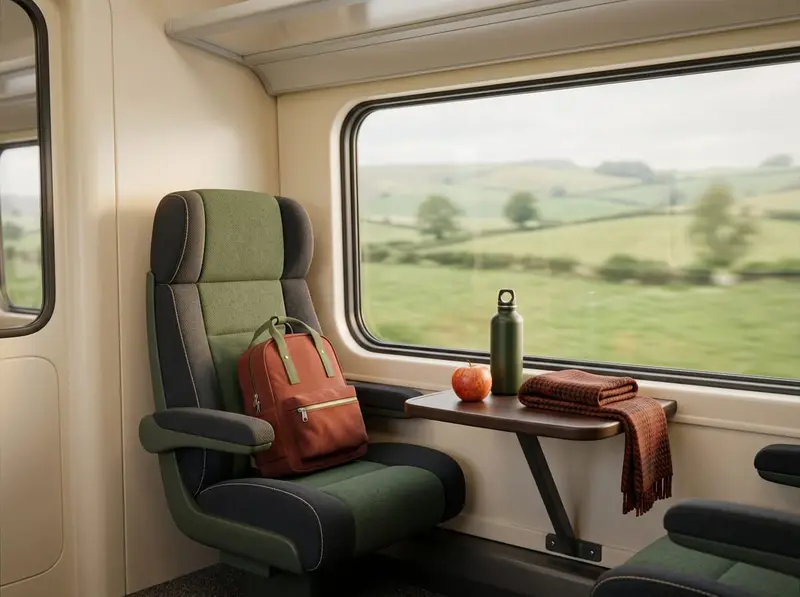
You pack, you fly or drive, you arrive, and a few days in your gut seems to have stayed at home. Going less often, or finding it harder to go, is common when traveling. It is rarely about one thing. A trip changes almost everything your gut relies on to keep its rhythm: when you eat, what you eat, how much you drink, how much you move, when you sleep, and which bathroom you use. Seeing those parts clearly makes it easier to bring a few of them with you.
Why a trip throws your gut off
Your gut runs on routine more than most people realize. At home, meals, sleep and bathroom visits tend to happen at roughly the same times each day, and the body gets used to that pattern. Travel often disrupts all of it at once: meal times, sleep, bathroom habits and the body's internal clock.
Drink matters too. Long days in transit make it easy to drink less than usual. When the body is short on fluid, waste moves through the intestines more slowly, and stools get harder and less mobile.
Then there is the food. Trips tend to mean different food from what your body is used to: more processed and fatty food, more alcohol, and fewer of the vegetables, fruit and whole grains you might eat at home. Less fiber gives the gut less bulk to work with.
What tends to make it worse
Sitting still. Hours in a car, a train or a plane seat, followed by a day in meetings or on a lounger, means far less movement than a normal day. Regular movement helps stimulate the muscles of the intestines, so a still day tends to be a slow one.
Holding it. Many people put off going because the bathroom is unfamiliar, shared, public or just not convenient. For some, a bathroom that is not their own is enough to cause real unease. But often ignoring the urge is one of the usual reasons things slow down, and on a trip it is easy to do day after day.
Rushing. Early starts, packed schedules and checkout times leave little quiet time in the morning. Stress itself plays a part as well: the body's stress hormones slow digestion, and travel days are rarely calm ones.
Three habits to try first
Keep a bottle with you and keep drinking. Water and other fluids through the travel day, and a little easier on the alcohol, give the gut the fluid it needs to keep stools soft.
Take your routine with you. Try to eat and sleep at close to your usual times, and keep a regular time and place for the bathroom, with enough time that you are not rushed. On a trip that often means getting up a little earlier so there is room for breakfast and an unhurried bathroom visit before the day starts. When the urge comes while you are out, use the public restroom rather than waiting.
Move every day, even a little. Walk the airport or the station, stand and stretch on a long journey, and build a walk into each day away. It does not need to be a workout: a ten-minute walk may be enough to help.
At every meal you can, add some fruit, vegetables, whole grains or beans, and go gradually if you are adding more than you usually eat. On the toilet, resting your feet on a low stool so your knees are above your hips can make going easier. Try not to sit and strain for long; about ten minutes at most is a good limit.
What the research says
The habits above are the standard first steps in NHS and Cleveland Clinic guidance: more fluids, more fiber, a regular bathroom time and place, a low stool under the feet, and daily movement. The NHS lists changing your diet or daily routine, and often ignoring the urge to go, among the everyday reasons people get backed up.
The case for movement has the most research behind it. A 2024 review pulled together 13 studies that followed groups of people over time, more than 119,000 people in all, and found that those who were more physically active were less likely to have trouble going than those who were less active. Studies like these show a link rather than proof that moving more is the reason, but daily movement costs nothing and is easy to fit into a trip.
When to see someone
If trouble going lasts more than a few days and up to a couple of weeks, or keeps coming back, that is worth a doctor's appointment. See a doctor sooner if you notice blood in your stool, a sudden change in how you go, or if things are not getting better with the simple steps above. These are signs worth checking rather than answers in themselves. The Gut Trail asks about blood in your stool, and about anything that has lasted more than four weeks or is getting worse, before it asks about your meals or your routine.
The specific version, for you
A two-minute trail guide for your digestion. A few questions, a focus area, and a few things worth trying. It starts with a short safety check.
Questions people ask
Why does it happen even on a short trip?
Because it is the change of routine, not the distance, that matters. Even a weekend away can move your meals, your sleep and your bathroom times, and it often means less water, less fiber and more sitting than usual.
Is it better to wait until I get home?
Holding it is one of the things that tends to slow the gut further. If the urge comes while you are out, it is better to use the bathroom that is there than to put it off.
What is the one habit to start with?
Drink more and walk more. Keeping a water bottle with you and walking every day of the trip covers two of the biggest changes travel makes, and neither costs anything.
Sources
- Cleveland Clinic: why your gut slows down when traveling
- Cleveland Clinic: home tips for staying regular
- NHS: when it is hard to poo
- Physical activity and bowel habits: a systematic review of cohort studies (2024)
Educational content, not medical advice. If this has lasted more than a few weeks or is getting worse, see a doctor.